Every Decision I Made Running "The Iron Coral"
This post includes in-depth discussion of the introductory dungeon in Into The Odd, THE IRON CORAL, and will spoil a decent amount of it.
In September, I moved to Seattle. Since then, I’ve been running regular oneshots of a variety of systems. This is both to play with some of my friends I’ve yet to play with, and to try new systems and styles of play that I’ve yet to experience. I hope to, once I get my own place and settle a bit more, take these experiences and turn them into a couple of regular long-term campaigns. But until then, why not write about them? By the end of October, I ran three oneshots in two systems. This article is about the first, a oneshot of Into the Odd’s introductory adventure in the remastered version of the book, “The Iron Coral.”
You know what’s weird? Despite my 12 years of TTRPG experience, I had never actually run a published adventure, as written out of the book, directly for a table. I had bought plenty, and harvested ideas from plenty more, but never actually just played one straight out of the text onto the table. This perhaps more than anything betrays my story game heavy background; I think Sam Sorensen’s observation that story-game design tends to be antagonistic to adventures is very accurate. Even when I ran OSR games, like a multi-year campaign in Errant, I made my own world, with its own themes and aesthetics, and I found it more enjoyable to craft my own dungeons, room by room, and only steal individual elements from other supplemental materials. Even when I played trad games, back in high school, I never ran adventures. I never visited Phandelver, unlike many of those like me who picked up DnD 5e at release. Numenera, my first and still beloved, has plenty of adventure materials, and yet I made all of my own material. This wasn’t out of value judgment in any way. I just liked doing it. But! I’m in a new city, in a new era, and therefore in an experimental mood. So, I took a system I’ve wanted to play, and the adventure that came with it, and ran it like it was in the book.
But of course, in the act of playing an adventure, a GM has to make interpretations. Beyond the basic rulings on mechanical actions, a GM has to make up details not written in the text, and interpret the PCs’ actions in the context of the adventure. Given that I’m new to running adventures, I realized immediately during play that I had a different relationship to my prep. When, normally, I was running something I prepared entirely, most interpretations flowed easily. I had an image in my mind from my prep, and I was merely elucidating it to my players. When running someone else’s prep, it felt often like running my fingers against a wall in the dark, only for the wall to give way, leaving me grasping at air.
 (Light Underground, by Astrid Nielsch. It's a picture of Tenar from Tombs of Atuan. She’s LITERALLY me)
So, I’ve decided to quantify it. I listened back to the recording of my Into the Odd session, and recorded every interpretation and decision I made about the world and the text that I thought was distinct enough to note. I wanted to see; what decisions felt good? Which ones didn’t? What answers am I still satisfied with, and what do I think the writer should have included? Hopefully, this elucidates something about the adventure writing process for you (and for me, given that I now Write Adventures).
I’ve phrased every interpretation as questions that I answered, along with timestamps. For reference, the entire recording was 4 hours, 11 minutes long, with 30 minutes of character creation at the start and about 15 minutes of out of character discussion about the game at the end and no whole-table breaks. Players were dipping in and out at small intervals for food, restroom, and fresh air breaks.
Dramatis Personae – Our Heroes!
C, playing Blantire “The Tire” Deluve, manager of a child sweatshop put on “permanent leave,” armed with a bomb and a saw
B, playing Theodosius Wickerspan, aged scientist with some acid and a magic coin
E, playing Luca “Diver” Walsh, slightly magnetic harpoon-wielding diving suit
G, playing Florence Alcove, chain-wielding rowdy sailor
J, playing Leckster Montaine, a knight out-of-time who got teleported here
Interpretations:
“Who else has come this way?” (~45:00)
Answer: According to their ferryman, a local fisherman’s daughter, “Hutton’s Girl,” came to the Coral recently, and hasn’t come out. There are ruined boats on the shore. She is the body in room 3.
Reasoning: I wanted to make an NPC that took the PCs to the Coral, to also add a diegetic time pressure for the oneshot. He certainly would know some of the people who also paid for his services. The adventure also said people had come but not returned, so it felt right for there to be crashed boats on the coral as well.
“Is this metal magnetic?” (Throughout the session)
Answer: Unless given information otherwise, yes.
Reasoning: First, the adventure is called “The Iron Coral.” Iron is magnetic. Also, Diver is magnetic, and I wanted to maximize his utility of his fun weird skill.
“What killed the fish on the beach?” (46:00)
Answer: They were bludgeoned against the iron coral.
Reasoning: This one was easy and felt logical.
“How tall is the foam in the foam-filled passageway to room 13?” (~58:30)
Answer: Around chest height for Deluve.
Reasoning: Felt appropriately dramatic and aesthetically compelling.
“When do the tendrils in room 3 do their damage? (1:11:45)
Answer: After disturbing the body, with a Dex save from Diver
Reasoning: There was no text about the tendrils other than their damage. Given the description of the room and the body, they felt like carrion creatures, so I had them act defensively about their food. Giving Diver a Dex Save (after describing the body as partially eaten) felt appropriate.
“Is the meat in the red room (room 2) rotting?” (1:21:15)
Answer: No!
Reasoning: The text given for the adventure gives no indication either way, but given that it does say that anyone who stays in the room after passing out gets digested over the course of an hour, the meat that used to be a dog is probably new enough to not be rotting. The answer also made my players worried. Which was fun!
“Does the Slug Crate get a moment to retaliate if Florence strikes it from behind?” (1:23:45)
Answer: No, she just gets to roll damage and I say the slug dies.
Reasoning: If it was meant to be an NPC with a fight, why isn’t there a statblock for it like other creatures? While the text says that it can give a d10 flash of light if threatened, I felt like Florence was sufficiently careful to avoid that damage by getting behind it and striking it quickly.
“Is a pile of polished bones bulky?” (1:24:15)
Answer: Yeah!
Reasoning: I’m only marking this down because bulky items mean something in Into the Odd. It was a decision that took a half a second to make. I considered, is carrying a bunch of bones around the same as a two handed gun (the most likely bulky item at start of game)? And I thought. Yes. Yes it is.
“How big is the pipe in room 11?” (1:30:30)
Answer: Big enough to get one foot in, but not enough for anyone to squeeze in.
Reasoning: I didn’t have anything for what was down there, but it was spewing a lot of foam, so it should be at least a little big. So, I made sure they couldn’t get down there and complicate my life substantially without immense effort.
“Inside of the grate babbling in an incomprehensible language in room 11, is there something to take behind it?” (1:35:45)
Answer: There is an electronic speaker that you can retrieve from behind the grate.
Reasoning: I have often said that adventurers in the old school mode should be “the types of people who look at an AC unit and see copper wire.” Given that my players were interested enough to rip open the grate and root around, what the hell, I might as well give them something.

“How does the Shell-Man in room 12 try to lure PCs into the chute down below?” (1:41:15)
Answer: Given that he is immoble and cannot speak except for hand gestures and little grunts, Shell-Man also has small trinkets to throw into the chute to emphasize how much he wants to go down the chute.
Reasoning: I just want to say, (almost) everyone in my party LOVED Shell-man. They thought he was an incredibly fun addition to a dungeon, and the amount of intraparty conflict that came with either trusting him or not was absolutely fantastic. I decided to give him small trinkets because, mostly, I was wrapped up in the joy of playing Shell-Man. I would do it again but had no strong reason to.
“How big are the cages in room 10? How many?” (1:45:45)
Answer: Around four cages, big enough for medium sized mammals, too small for most humans. Dog cage sized.
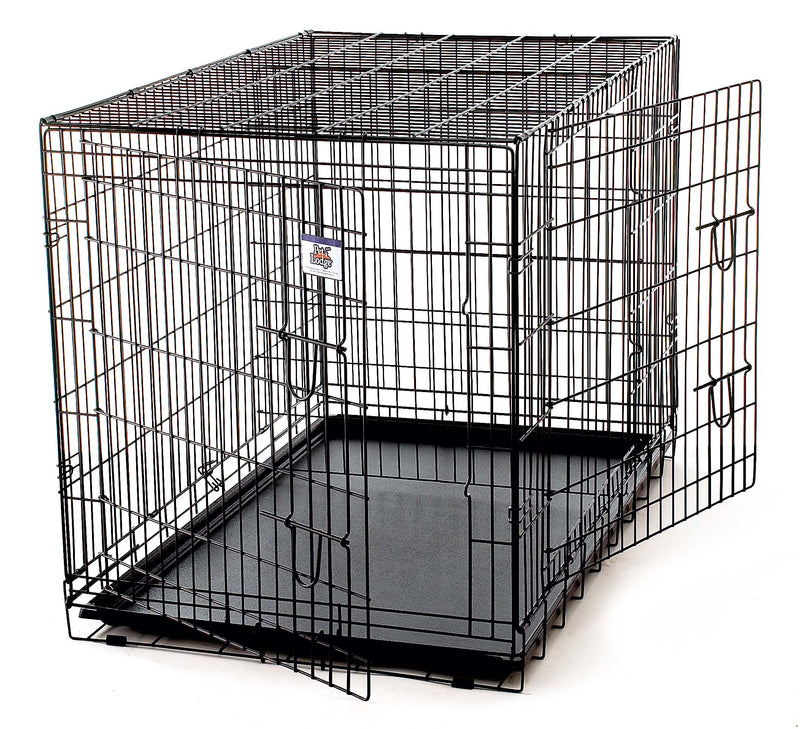
This type of cage is not easily accessible in my mind for any particular reason.
Reasoning: I kinda wanted the cages to be interesting and compelling potential tools for the players (because touching them causes a blast of hot air and damage). There weren’t any pictures in the dungeon, so I just decided they were the size of a dog cage, which is bulky but transportable and easy to imagine for me. No reason.
“What are the walls of room 10 made of?” (1:47:00)
Answer: Also stone.
Reasoning: There’s no description of room 10’s walls, but it feels aesthetically in line with its adjacent rooms, which are described as stone, so I decided they were also stone.
“How would a random encounter of an untrustworthy treasure hunter respond to an invitation to ride home with the party?” (1:52:30)
Answer: Some willpower rolls determined that he will take the ride but does not want to explore with the players. One of the ruined boats was his. His name is Emmett.
Reasoning: I think that “untrustworthy” is a very very useful word to describe an NPC in an adventure. It also requires a lot of GM intervention to determine where that does or doesn’t land. The other hunter, who I named Emmett Lowbile, decided to take a ride out (given how rare they seemed) but didn’t want to share loot with his compatriots.
“Where does Emmett go after the players let him free?” (1:52:45)
Answer: Down the chute that Shell-Man wants you to go down.
Reasoning: Who doesn’t love Shell-Man? (Tire. Tire doesn't love Shell-Man.) There’s no reason not to trust him. Emmett probably likes Shell-Man. Doing this also means there’s now a rope tied off and running down the chute, tempting my players further.
“When does the Crawling Carapace, “driven by cruelty to the weak,” decide to strike?” (1:55:15)
Answer: He waits until the party’s back is turned, crawling out of the hole to strike at the weak back rank.
Reasoning: In retrospect, I feel like I played the Carapace a bit too smart. I'm not sure they would've known, down there in the dark pit, when the party was facing away from the pit. That being said, “driven by cruelty to the weak” gave me such a strong directive for playing the monster that it felt right for it to just wait.
“Is The Tire throwing a bomb at the Jaw Beast enough of a distraction for it to let go of Theodosius?” (2:17:00)
Answer: Test the Jaw Beast’s incredibly low willpower to see if it was distracted (it was).
Reasoning: The Iron Coral is a place full of flesh that is metal and vice versa. I really didn’t know if the Jaw Beast knew the difference between them. Also, the act of throwing a timer-set bomb into a room with an ally was exciting, dramatic, and foolhardy, in a way that I thought was exciting. Leaving it up to the dice (but testing the willpower which was intentionally set by McDowall to be low) felt like it threaded the needle of rewarding the play while letting it be risky.
“Does The Tire’s bomb do enough damage to kill the Jaw Beast?” (2:22:00)
Answer: Yeah, clearly. Viscera everywhere. The things in its guts roll to see if they were destroyed in the blast.
Reasoning: The bomb has no damage dice in the book. The bomb is a single use item granted by a starting equipment. Using the bomb is a big commitment, even for a oneshot. It feels like the bomb is meant to be something that dramatically and messily solves one single problem. So yeah, it died. It’s like the end of The Thing. Hell yeah.
“After multiple people have gone down the shaft in room 12, is it still slippery?” (2:34:00)
Answer: No, not enough to affect rolls. Climbing up without the rope still requires a roll, but the friction of sending people down the shaft has cleaned it a bit.
Reasoning: The room detail says the prevalence of soapy foam in the chart is what makes it impossible to climb without a rope. I imagined each adventurer as not unlike a pipe cleaner.

A depiction of an adventuring party, if you have the imagination to see it.
“What do the alien symbols on the doors in floor 3 look like?” (2:36:15)
Answer: Like those symbols that have dots inside or outside of a box to show you what sound it is. Yeah, those ones. Pigpen Cipher.
Reasoning: I didn’t expect to answer this, so I reached for something that felt appropriately alien/sci-fi-y.
“If a player attacks Shell-Man, does he die?” (2:39:45)
Answer: Yes. Immediately.
Reasoning: Shell-man is explicitly immobile, and has no stats. This made me feel like the poor guy is completely defenseless. RIP Shell-Man.
“Can the harpoon gun get a rope back up the shaft?” (2:42:30)
Answer: Yes, with a good dexterity roll.
Reasoning: A character has a harpoon gun as part of their starting equipment! It’s exciting to be able to use it! I also think it’s worth thinking about how difficult it is to do such a thing. But overall, it feels like rewarding creative play using the equipment at hand.
“What does it smell like in the Fuel Chamber in room 9?” (2:51:15)
Answer: Like kerosene.
Reasoning: I think it’s a suitable warning that this room is full of an unstable flammable material, and it is a smell that our industrial fantasy PCs might know of, but would still find weird.
“What makes the plates and cutlery strange in the dining room (room 18)?” (3:00:00)
Answer: The plates are metal, matte, square, and die-pressed. The cutlery are for strange hands, and the fork looks like the Spear of Longinus in Evangelion.
 That's one weird fork.
Reasoning: This is some of the most fun things to do for me as a GM, so I had a good time going into more detail than the book had. It’s nice to put a bit of your own paint onto the canvas, give your own little strange touch to a strange place.
“What’s inside the chairs in the dining room in room 18?”(3:04:00)
Answer: A strange synthetic, fluffy material that tears like cotton, which we players may call “polyfill.”
Reasoning: I wanted a strange material, so I went for a modern answer. My players were getting really curious into the materials and the design of the dungeon, trying to consider its past and purpose. It was fun to lean into the weirdness.
“Is the Black-Scaled thing in room 13 too big to leave its room through the doors to the side?” (3:15:45)
Answer: Yes.
Reasoning: The drawing clearly shows the creature almost entirely filling its room. I also think it’s a compelling answer that leads to more questions.
“Do the gunshots in the other room awake the Black-Scaled Thing?” (3:17:15)
Answer: Yes.
Reasoning: Guns loud! Also, the creature is polite and manipulative, and we were approaching the end of the oneshot, and I thought this creature, no matter how it’s handled, would be a good capstone.
“What is the Black-Scaled Thing’s plan to escape this dungeon and exact murder upon a large population?” (3:18:45)
Answer: The dungeon, particularly the 3rd level, is a flying machine of great complexity. The Black-Scaled Thing knows that one could turn the engine on and lift the ship into the air, shaking off the extra cruft the machine has accrued over the years. Once the ship is in the air, a door above the Thing will open and allow it to escape, tearing its way through the countryside. My players did, indeed, do this.
Reasoning: This is the decision that I made that made me most interested to write this article. In the moment, it felt very very logical, for a wide variety of reasons, and I think that despite the fact that this option is not in the text of the adventure in any way, it did facilitate this decision very very well. The creature is intelligent and polite, while also being within a room too big for it. The engine room, as listed in Floor 3 Room 19, is listed explicitly as having no physical damage. The fuel room has enough to cause a massive explosion if there’s any damage. The aesthetics of the entire dungeon is strange and alien, with designs that evade the understanding of the player characters. I also had an exogenous reason to make this decision. We were coming towards the end of our oneshot, and it felt like a very exciting way to end a session: flying into the air, releasing a terrible beast upon the world to cause mass death.
What did I learn by doing this?
I was honestly surprised by how little I did have to make interpretations, and how much I enjoyed doing it. Every time I listened back to myself making a ruling on what something looks like, I sounded a bit hesitant, but clearly enjoying myself. I had thought, before this, that the act of interpreting a pre-made object would frustrate me, and that I’d have to do it more. But neither was true.
Despite my final interpretation being a big swing, that widely diverges from the adventure as written, I can now clearly see the line of reasoning that brought me there. I made interpretations of the world handed to me, and as I did, especially towards the end, I built towards a final interpretation, that was a full leap away from the prepared material into a new direction. I wonder if this is a product of the act of interpreting itself. When running someone else’s game, is there a point where someone eventually has to step into the unformed black surrounding the world, and see what emerges? Maybe. I dunno. This was fun.